Showing posts with label Blog. Show all posts

Sunday, October 19, 2014

How to make your customer give testimonials happily

By With No comments:

Why is getting customers' testimonials important? 

Your testimonials page is powerful that can have huge impact on visitor's shopping decisions. Great testimonials tell people that your product or service is not only legit, but awesome enough that other people are seeing great results from it.


So you know how important it is, but how can you collect believable customers' testimonials?
Here are suggestions for you to get your customers give their testimonials happily.

1. Rewarding Customers Who Review

So, considering all of the above mentioned sites that you can get customers to share their opinions on, what can you do to encourage them to create these reviews?
Offer your customers incentives for creating reviews. Local search directories allow you to share coupons and discounts on their sites. Special coding on Facebook can allow you to share special offers for fans only. You can offer a giveaway for people who send in a video review. The possibilities are endless, and the better your offer, the more reviews you’re likely to receive. 
Chances are, if you ’ve been to a restaurant recently, you have seen an offer on your receipt for a chance to win a cash prize if you call in to do a review over the phone. This same strategy can be applied to online reviews as well.

2. LinkedIn Recommendations

LinkedIn can be a great source of reviews, extracted from your recommendations. Of course, you can’t get reviews on your company profile – they are only available for individuals, which is great if you’re a freelancer, doctor, sole-proprietor, and so on.
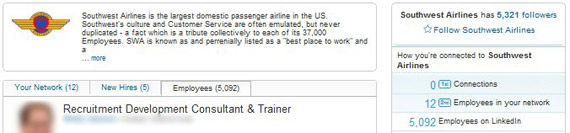
linkedin company profiles
But what if you own a company with many employees? Why not encourage all of the employees to be active on LinkedIn? This might lead to individual employees receiving recommendations from customers they work with on behalf of your company, and with their permission, you can use these recommendations on your website, either on a testimonials page or a page dedicated to your employees’ bios.

LinkedIn Company Profile
Plus, it wouldn’t hurt for someone who is researching your company on LinkedIn to see that you have an employee with an exemplary record, like the LinkedIn member above.

3. Niche Review Sites

Depending on your business’ industry, you may also want to focus getting reviews on niche review sites. Hotels, for example, would want great reviews on sites such as ExpediaTravelocity, and Trip Advisor, as many people get their first impression of a hotel off of these types of travel reservation site over the hotel’s main website.

4. YouTube Video Reviews

What is stronger than a text based review? How about a video of your customer talking about how your products or services have helped them? Encourage your fans to add videos to their own YouTube account and let you know the link – you can add these videos to your channel as Favorites and create a playlist of customer reviews.
You can also keep a Flip camera in your office / store and film reviews on the fly to add to your own YouTube channel. If you have a strong YouTube channel to begin with, people will be happy to be featured on it in exchange for their thoughts.
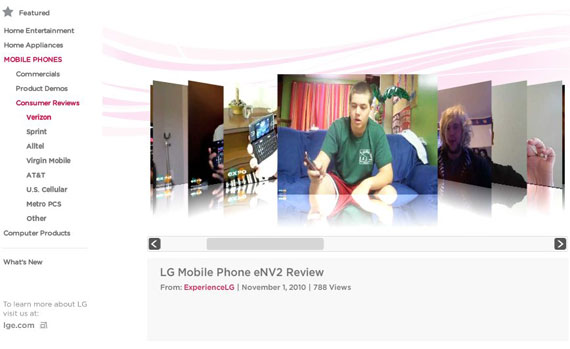
youtube customer reviews videos
A great example of a customer review video collection is the Experience LGchannel above which has customer reviews for their home entertainment, home appliances, mobile phones, and computer products.

5. Google Alerts and Social Mentions

Last, but not least, there are likely a ton of customer reviews that are written about your company on other sites, such as personal blogs, that are unsolicited. Setup daily notifications via email on Google Alerts and Social Mention for a variety of applicable terms in order to keep track of brand mentions, including your name, business name, brand, and specific product names plus the word review.
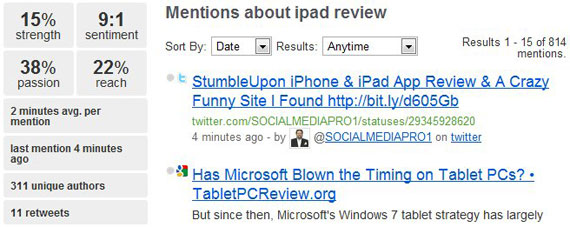
Social Mention Search
Use these alerts to find out about any reviews and ask the people who have mentioned your brand if you can feature their comment or story on your testimonials page. Usually people are happy to oblige, especially in exchange for a link from your site.

6. Facebook Reviews

If you have a Facebook page and are setup as a local business, your page now comes with a Reviews tab.
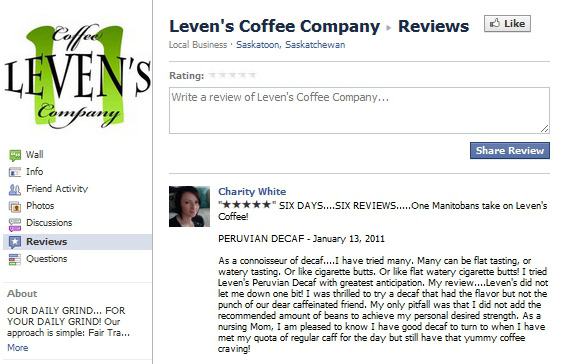
facebook reviews tab

Simply slide this tab over into your visible tabs, and encourage your fans on your wall to go over and enter some reviews.

7. Local Search Directories

Local search directories such as Google Places, Yahoo Local, Yelp, Merchant Circle, and CitySearch allow members of their networks to write reviews about local businesses. If you have great reviews on these sites, you should share them on your testimonials page as well.
Why would you want to steer your customers to writing reviews on these sites as opposed to writing a testimonial directly for your site? Simple. If you are trying to get Google search traffic to your local business, you would want your business to come up in the search with the most reviews.
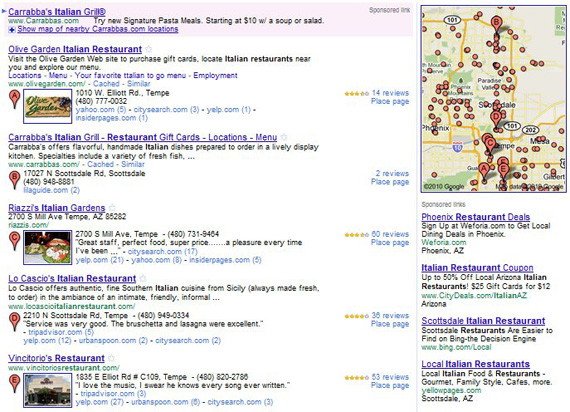
Google Places Reviews in Local Search Results
Many local search directories are interconnected as well. Google gets reviews from Google users, as well as pulling in reviews from other local search sites like Yelp. Merchant Circle allows member reviews and also pulls them in from Yahoo Local, CitySearch, and other sites as well.
So what does your business need to do to start getting reviews on these sites? Claim and update your listings on them, for starters, and promote your listing directly on your website so customers know where to go to send their reviews.

Compiling Your Testimonials Page

So now that you have collected all of these great reviews, you will want to add them to one page on your website that you can direct potential customers to so they can see what great things you have done for others. Be sure to credit the review to the site it came from (such as linking to your Yelp profile), as this may encourage people to continue on to your profile on that site and add more reviews. Also, if necessary, get permission from the person who wrote the review and confirm that it is alright if you add their review to your main site.

The Darkside of Reviews

There is one downside when it comes to opening the doors for reviews on your Facebook page, local search directories, and other sites that you can’t control, and that is the chance that all of the reviews will not be positive.
Whenever you come across a negative review about your business, it is essential that you respond to it. If someone comes across a negative review, but also sees that you have offered to help solve the problem in a public forum, then that potential customer will see that you do care about your customer’s happiness, which may lead to a positive impression after all.
Thursday, October 9, 2014

GEO targeting: the best way to increase your conversion rate

By With No comments:
It is crucial for you to increase your conversion, whatever your aim is eCommerce, newsletter registrations, advertising impressions, time-on-site or any other purpose.
The optimization process is data driven, much like any scientific experiment. You modify and change then let the traffic to your site create data that breeds insight, intelligence and ultimately a basis for making decisions that get you closer to your goals.
Most of the elements of a website or page are within our control: design, text, navigation, etc, but on the other side of the coin are the people that make up what we so casually call “traffic”.
How can you use your existing infrastructure and marketing efforts to cater for such a large audience at once? How can you make sure that your traffic is really getting the most relevant content leading to a conversion? The answer is Geo Targeting.

Geo-Targeting? What is it?

Generally, geo Targeting can be seen as an active response to Geo-Location: Having identified the visitor’s location according to the IP, and/or WiFi / GPS data (=”geolocation”), content specific to that location is served (=”geotargeting”). This location can be a country, state, city and more.
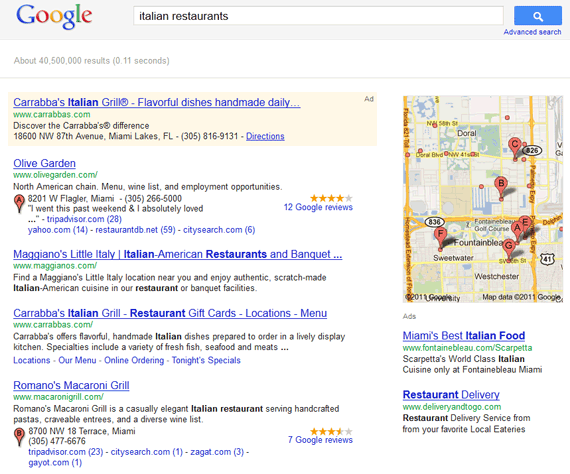
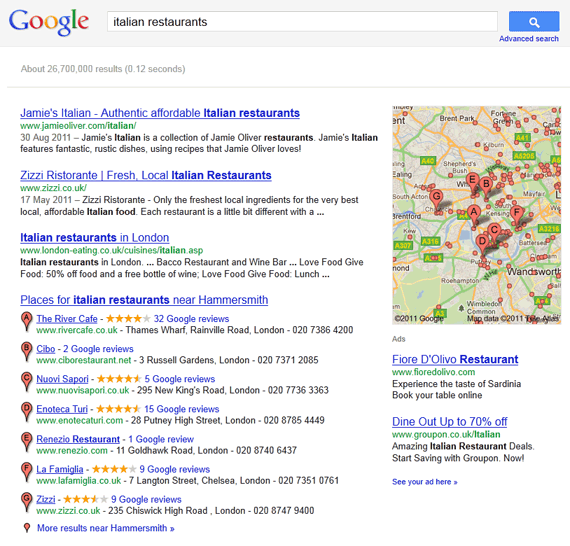
The simplest examples of Geo-Targeting are SERPs:
Here is a search on Google.com for “Italian restaurants” from Florida:
Search for italian restaurants in Florida
And now again, this time from near London, UK:
search results for italian restaurant in United Kingdom
Naturally, the results are specific to the location, in an effort to serve information that is relevant to the query, thus driving conversions.
Spot the difference? There is variation in language, visuals, relevant texts e.g. “Driving from Singapore into Malaysia”, and more. Both are on the same domain and root directory of “Hertz.com”.

What is its role?

It is valuable to make a prior segmentation that is location-based when setting up conversion experiments that test different page elements. Testing different ideas and approaches when location is taken into account, usually creates very interesting insights. What will work better for your funnel – showing your traffic from Spain pages in Spanish or English? Will you quote Euro or Dollar?
A/B testing is a useful tool, as well as multivariate testing. Yet, if the traffic is segmented correctly according to location before the split, your experiment is of far better quality, which will yield better results for you.

What should be tested?

Here are 5 ways Geo-Targeting can help you increase conversions:

1. Evaluate visual elements

As with any Split or Multivariate testing, modification of the visual elements can make a big difference. Similarly, testing different design elements based on the visitor’s location may enlighten about the funnel you’re testing. The way bright colors are interpreted by one culture on side of the planet may be vastly different to another. Think of holiday themes as an example, or national flags as another.
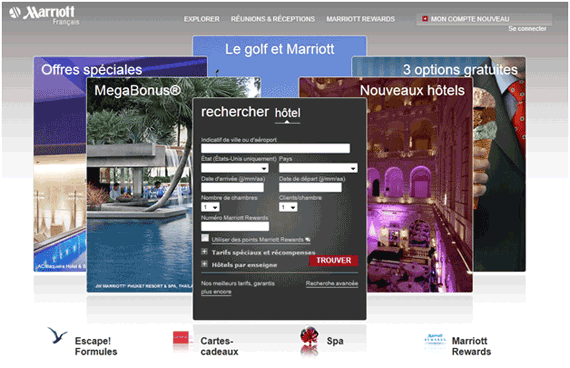
Here is Marriott.com as viewed from France:
marriott website for France
And from Japan:
hp for Egypt
Even without understanding the content, the visual difference is significant. Also note that the initial form on the page for the Japanese site is different.
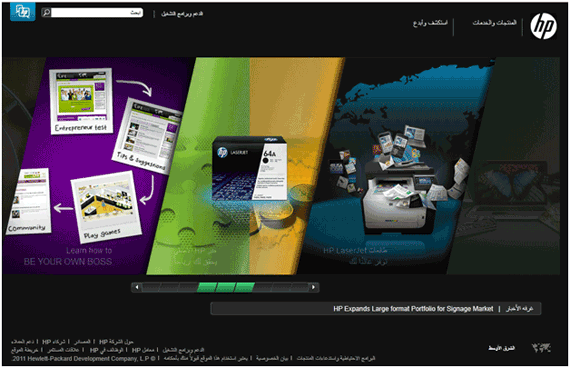
Another example is HP.com from Egypt: note the Right-To-Left changes, and some of the language in the images.
hp for Egypt
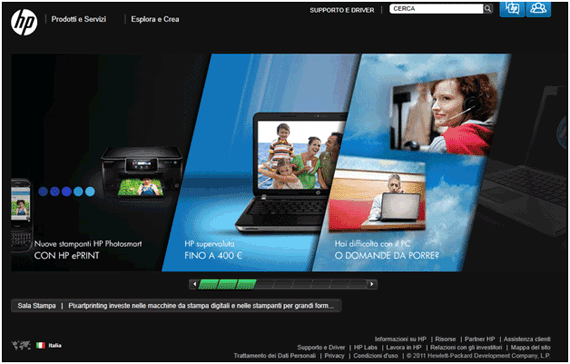
The Italian version:
hp Italy website Italia
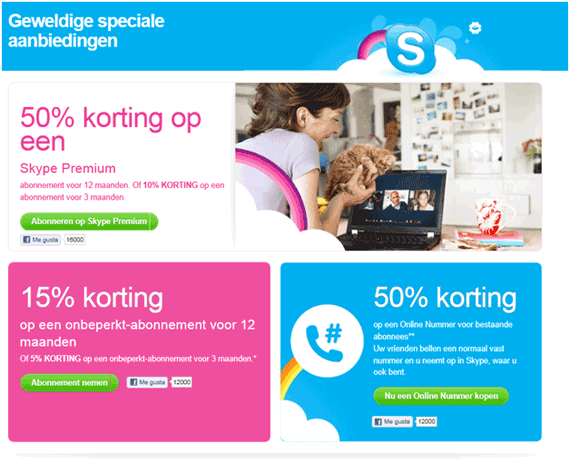
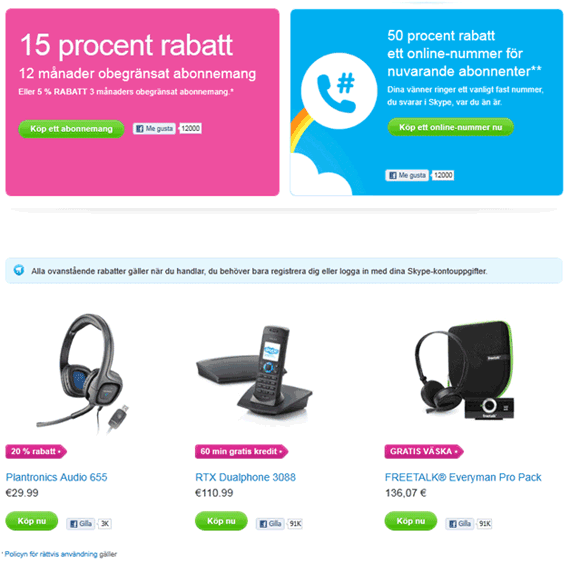
It gets very interesting in the “Special Offers” page on Skype.com:
Below are screenshots of the Special Offers page from the USA, Holland and Sweden, in that order. There are significant differences here, not only in design, but in offering too.
skype holland website

skype sweden website

2. Experiment with languages:

Match the page language to the visitor’s country of origin (You should allow a language switch of course) Measure what converts better if you have an entire funnel in different languages, otherwise decide on a KPI on the page (CTA click, time on site, etc) and measure its performance.
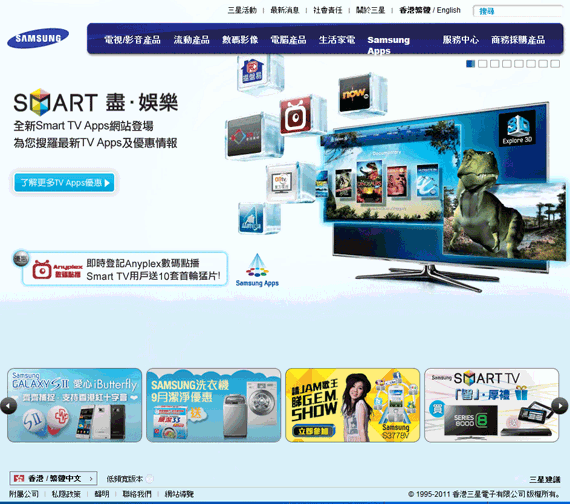
For example, visiting Samsung.com from Hong Kong redirects to their smasung.com/hk directory, and the language is as expected. Finding the location change icon is fairly easy at the bottom left, as is the language switch at the top right of the main menu.
Samsung Hong Kong Website
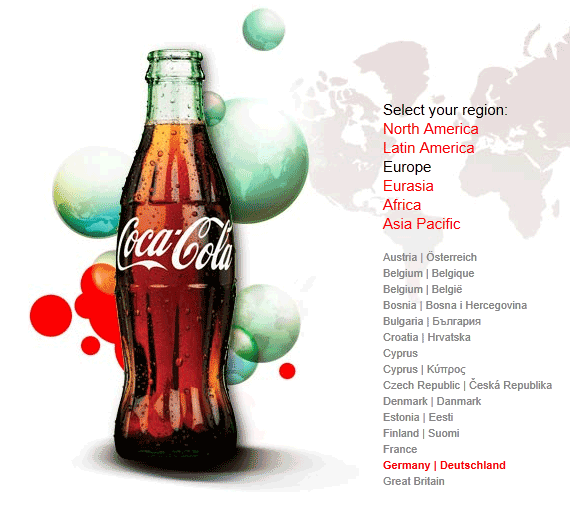
At Coca-Cola’s site, when browsing from Germany, the site’s language is English, but Germany is emphasized, making an easier decision for the visitor. These splash screens are common for international sites, but whether they convert better is a valid question.
Coca Cola Germany Website

3. Evaluate serving Local, Relevant offers:

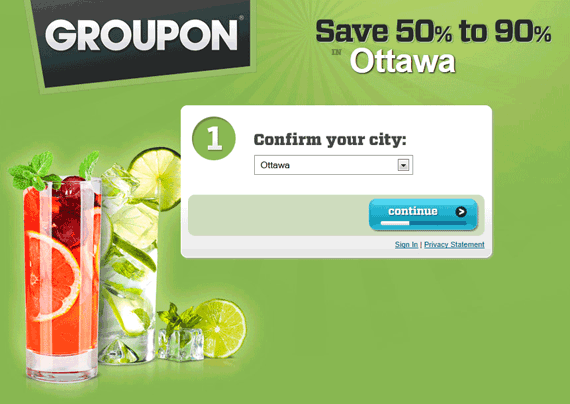
Try to match the offer you make on your pages (product, service, message, etc) to the visitor’s specific location. This sounds simple but requires careful thought and planning. Measure funnel performance for visitors that are geo-targeted versus a control group – are people finding this “filtration” helpful or confining in a way? Statistically, do visitors that are directly served with local offers differ in behavior than those that are asked to “choose your location”? Test it!
Groupon Ottawa Website
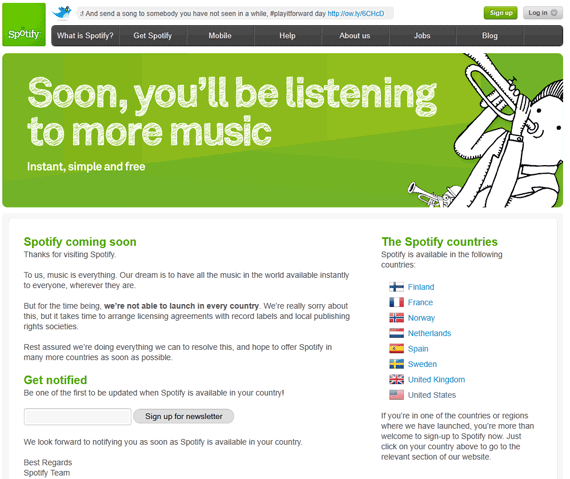
Another common issue is product or service availability for certain countries. Sometimes, you can only sell in one country and informing your international traffic of such is considered good practice. Why create a negative customer experience by showing something they cannot buy? Create anticipation instead:
spotify nonus

4. Match currency:

Experiment with another currency based on a region or country. You may want to keep it simple and try it on one popular product or landing page. Measure sales in combination with location – are the conversion rates any different if you display the currency of the visitor’s country?
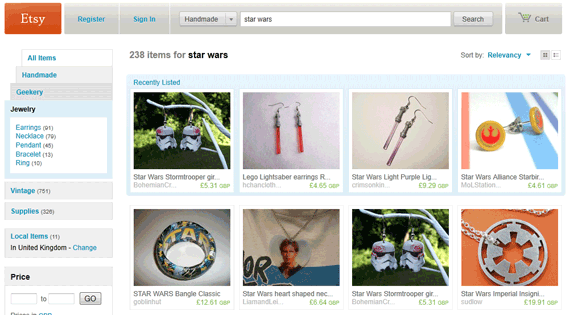
Etsy.com does this well by displaying a wide variety of currencies for the products on sale. Here is a search for “Star Wars” jewelry from London, note prices are in GBP:
Etsy United Kingdom
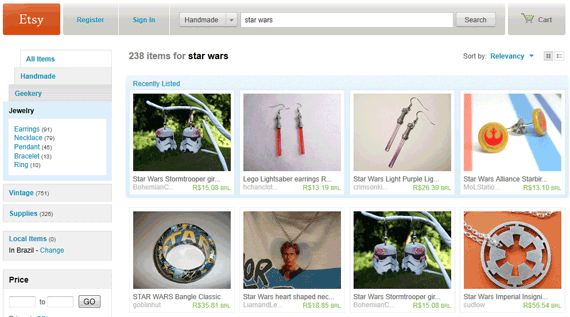
And the same search from Brazil shows the prices in BRL:
Etsy in Brazil

5. Match Marketing

Geo-Targeting allows you to run different campaigns in different locations. Your ads might be served all over the world and vary in their marketing message according to the segment and audience that you approach. Is the marketing message on your site the same as the geo-targeted ad? Experiment with sending traffic from a geo-targeted banner to a geo-targeted landing page (in language, currency, offer, etc) and to a generic page – what converts better?
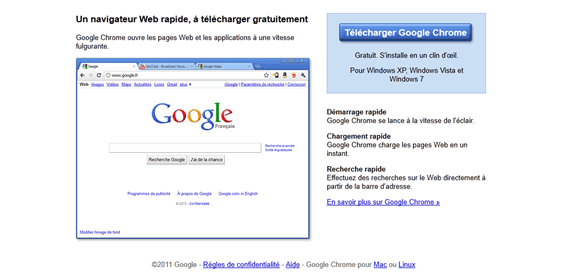
The Google Chrome campaign is a great example, as it serves over 100 different banners in Europe alone! Naturally, the banner matches the download landing page:
Chrome Banner
chrome France

How to geo-target your pages for testing?

Ok, so how do you test some of these location-based assumptions?

1. IP Redirect:

To keep things simple, you may try IP based redirects on your server. You can setup simple redirects based on geolocation, using .htaccess or httpd.conf on your Apache server (mod_geoip). The GeoIP API (MaxMind) will enable you to quickly configure your server to divert traffic according to the originating IP. Your web analytics and optimization should do the rest. All you need to make sure it that you have a couple of landing pages to test your assumptions on.

2. Pay-Per-Click Advertising (PPC)

Another easy, yet possibly expensive, way of testing geo-location is using a PPC platform such as AdWords. You can set your campaign targeting to very specific locations and languages, as well as set the destination URLs of your individual ads. Similarly, this will require a set of landing pages for each campaign, but delivers results very quickly. You may be able to run a fast, data rich, and location-based conversion analysis with little more.

3. Geo Target domains / subfolders

Another method that you may consider is following Google’s Webmaster guidelines for country segmentations and either using subdomains or subfolders for specific countries and languages. This assumes that you have a generic TLD (.com, .org, etc). For example, es.example.com or www.example.com/es/ for Spain/Spanish. This might be the better local SEO solution because it also means that the subdomains or subfolders you specify will be shown in local searches on Google, based on TLD. The downside is that it requires a fair amount of work to setup, and might not coincide with your branding efforts internationally. An important note about this method is that it does not solve the problem of language, but only the country location. So if your service or product is available internationally, you probably shouldn’t limit the geographic location for which Google serves results. Nonetheless, this approach serves as a good platform to initiate conversion optimization on those segmented pages or sites.

4. Geo Target Content

For content specific items, and multivariate testing, geo-targeted placements and elements will rely on your current traffic flow and allow you to run these experiments without the PPC overhead and an international SEO strategy.
There are several options:
1. Coding:
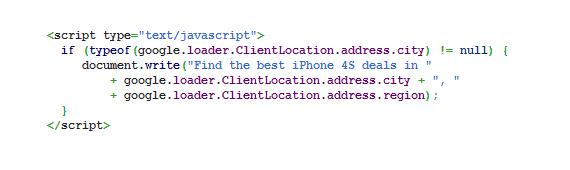
Use PHP, JavaScript (and/or more) to query a geolocation database, and perform display logic accordingly. You will find numerous examples on the web to accomplish this. It’s fairly simple if you’re comfortable with going behind the scenes.
geolocation javascript
2. Web Services and Tools:
The user friendly optimization platforms such as UnBounce and Visual Website Optimizer, and even Google’s Website Optimizer don’t support simple Geo Targeting of web elements or Geo Split Testing out-of-the-box (yet). If you use Omniture (Adobe Test&Target) and such then you’re probably already using Geo Targeting on your content.
3. The Google Website Optimizer + BTBuckets solution:
For the rest of us, here is the best way to run a geographically segmented test on your site using Google Website Optimizer and BTBuckets – for free! BTBuckets is a real-time segmentation tool that lets you segment your traffic and then define actions based on that segmentation. Running the Website Optimizer code is one of them.
If you want to Split Test, BTBuckets have a browser plugin that will modify the Google Website Optimizer code to work with the segmentation you create with BTBuckets. It’s fast and simple. For multivariate test you’ll need to:
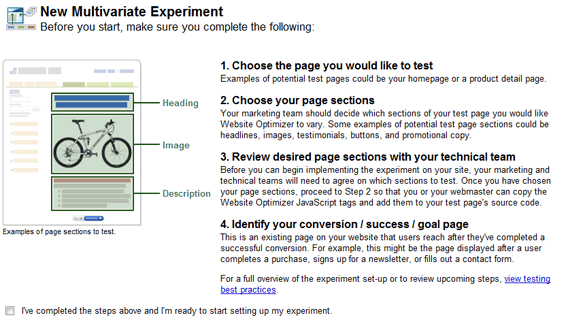
I. Set up a test in Google Website Optimizer and implement experiment JavaScript code on your pages.
Google Website Optimizer
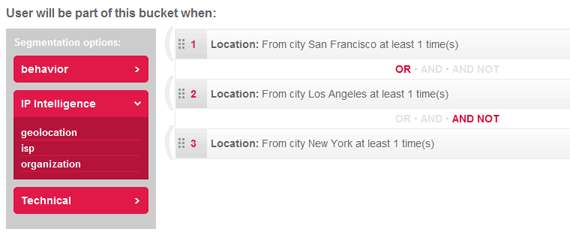
II. Set up geolocation buckets on BTBuckets
bt bucket
III. Add the BTBuckets tracking tag to your site
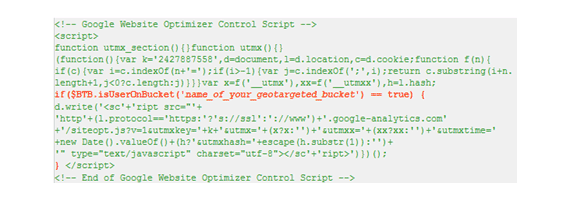
IV. Modify the Google Website Optimizer tags (Control, Tracking and Conversion scripts) to be conditionally activated if there is a Bucket match[1].
bt buckets code
V. That’s it! Run your test. (Links to the full instructions are at the end of this article.)

How to Monitor Geo Targeted Conversion Tests

Ok, now what? How do you know it works?
Having initiated a Geo Targeting conversion experiment, you are faced with an inherent problem: how can you verify that your Geo Targeting works? One option is to ask people that are located worldwide to browse your targeted pages and inform you of the results. Another, far more convenient method, is to use a “global geo proxy network” that allows you to browse the web from different global locations.
There are several such services available that allow you to choose from over 100 worldwide locations including countries and cities. The easiest, safest and most reliable to use are browser extensions that enable you to simply select a location from a dropdown menu and browse as usual.
Global visibility tools such as proxy network services encompass many benefits for the process of geo-targeted conversion. Some are:
·         See for yourself that it actually works!
·         Run through the funnel and verify that all the settings are correct.
·         Personally inspect issues such as performance and latency that may affect your conversion. If you measure Page Speed you may discover that distance=latency=low conversion.
·         If you advertise on your site (AdSense, etc) you might want to see what ads are displayed on your site when viewed from different locations. It may be a factor deterring or contributing to conversions.
·         Crucially important – examine what your competition is doing in other markets! Find out the relevant offers/interests/deal/etc for a specific location even if you’re on the other side of the planet. Use that intelligence to come up with your next winning design, offer, story, etc’ and modify your test accordingly.


Sunday, September 28, 2014

Hottest deal of the year for Gift Extension

By With No comments:

Hi Buddy,

How are you doing? I know when you visit this blog, your concern is Magento Store Locator Extension. We are always grateful to welcome you in our blog. As a thank you for your loyalty with our extension, we offer you 3 Gift extensions of our best products at a discount price that makes you and your site ready for the upcoming holiday season.

20 % off of any of Gift extensions: Promotional Gift, Gift Card, Gift Wrap

What if you want to have all 3 of them? Not worth worrying as you are being offered the hottest Deal of the Year:

Combo 3 Gift Extensions for only $240 (33% OFF)

Promotional Gift, a helpful guy for your campaign setup

Magento free gifts|Magento Promotional Gift
 You have already had a strategy for your web-store but it is just on your thoughts? For your consideration, Promotional Gift extension will be a tool you need to make it real. For example, in your campaign for your fashion store’s 5th birthday, you want to offer your customers a free T-shirt if they buy any items in Jeans category? Or give them 20% discount if their order is more than $100? It’s all possible with Promotional Gift.       This extension also allows you to:
  • Create flexible catalog and shopping cart rules to offer free Magento gifts with purchase.
  • Use multiple shopping cart and catalog rules simultaneously
  • Use calendars to set the frequency of promotional offers
  • Create a coupon code for each program, allowing Customers to receive gifts when using coupon on shopping cart page
  • Support many product types: simple product, configurable product, bundle product and grouped product
Here are only some among persuasive features of Magento Promotional Gift. I’m sure that you can even persuaded when visiting the product page. Spend your time seeing why it is so magic.

Gift Card, a one-size-fits-all online Gift Voucher

You know, gifting is not only a habit but a tradition in many countries, especially on holiday occasions. How long does it take you to find the most suitable gift for your beloved? No matter what the answer is, Gift Card will absolutely be the smart choice for you. Gift Card extension
Imagine how your customers are happy at your store when they can:
  • Be offered Gift Cards at different values choose at their convenience.
  • Choose to provide their name or not when sending Gift Card to friend, and get notifications if the card is sent successfully.
  • Have a chance to buy Gift Cards at a lower price than their actual value.
  • Select Gift Card template and upload their preferred image before sending.
Go to Gift Card product page so that you can even be impressed by other features it can offer you. Don’t hesitate. Right now!

Gift Wrap, the last step but not the least

After a satisfactory gift is chosen, this last step shouldn’t be forgotten: Wrap your gift beautifully. What if your customers have to run far away just to find another store with gift wrapping service? Don’t lose any good points in your customers’ eyes by offering them this service in your store. Remember that your customers’ benefits are also yours. With Gift Wrap extension, your customers can: Magento free gifts|Magento Gift Wrap
  • Wrap one or multiple products in one Gift box
  • Add Gift card and personal message to the Gift box
  • Order 1 or multiple Gift boxes in an order
  • Delete/ Edit the Giftwrap option on the shopping cart page
  • Have the wrapping information added to order, invoice and shipment
For more details, go to its product page to see more expecting features in details.

Wednesday, September 24, 2014

Top 5 Tactics for Local Marketing

By With No comments:
Emotion marketing becomes more and more popular. There is no doubt that the best local business ideas may not be seen or even touched but felt with the heart.
For years, big box stores have been putting pressure on local businesses. More recently, online e-tailers have cost smaller retail stores even more by offering free shipping and returns, while being aggressive on price.
Competing on price alone is dangerous, so I’d ask: Are retailers losing sight of what really matters? Does price matching help retailers build the brand equity they really need?
Recently, the increase in showrooming, where potential customers come into a retail store but proceed to buy the items at a less expensive price online.
Surely you have done it once or twice, and when you did, think about what helped that decision to buy online. A consumer shopping survey, conducted by the Kellogg School of Management, showed the reason why people shop in store and then buy online may come down to bad customer service experience. In fact, 40 % of people who ended up buying online intended to buy in-store when they arrived.
I have a theory about showrooming: While most retailers gravitate toward competitive pricing to combat showrooming, retailers could be saved by implementing a customer service strategy instead and where its difficult for the big retailers to successfully implement, that is where local businesses can win.
Building relationships in-store with every customer who scuffs his shoes on your welcome mat is the best local business marketing idea there is.
Here we suggest you the five best local business ideas for marketing to heart if you want to get more customers in your door and convert them into your loyal customers.

1. SHOP SMALL AND TARGET LOCALLY

For short-term promotions, try paid search campaigns. For example, last year we worked with a local hardware store 30 days before BBQ season began. We created a paid search campaign that only targeted users searching for BBQ equipment in the local area, and returned more than 1,000 visitors to their landing page where customers could sign up for a coupon to use on BBQ equipment. From there, the customers could come in and buy BBQ equipment with a discount.

2. BE TRULY PRESENT IN SOCIAL MEDIA

Social media is a valuable tool for online marketing, but there’s using social media and there’s embracing social media.
The most successful local businesses using social media are the ones who use it to start discussions and talk directly to their customers. Marketing is much more than posting about your 20 percent off sale; it’s gathering up all of your employee’s favorite items, taking a photo and showing people that they will save 20 percent off all your hand-picked, favorite items (Do this, trust us, it works and is simple to make happen).
Then, it’s publishing a blog, a Tweet and a Facebook post describing what you love about all the items. Social media without a strategy and some personalization is just more white noise.

3. RESPOND TO CRITIQUES WITH HUMILITY AND POSITIVITY

People leave bad reviews for different reasons; sometimes it’s your fault and sometimes you’re the victim of someone’s bad day. When you get a bad review, you have two options: respond or don’t respond. Managing your online reputation is the art of knowing the answer.
Many times, reviewers will update or erase a bad review as the result of a genuinely concerned response from the business owner. Build a bridge by offering a gift certificate and asking for a second chance. If their complaint was with an employee whom you’ve since let go, tell them. Acknowledging their gripe is sometimes all it takes to turn the digital signature of a frown, upside down.

4. EMBRACE BEING A LOCAL BUSINESS

The best local business ideas for building customer loyalty include adding a face to your business. If everybody knows you as the owner, use that to your advantage. There’s a local gift shop owner who goes door to door and introduces herself to new businesses when they move in; she shakes hands with everybody. When she leaves a tip at a local restaurant, she leaves a coupon. She gets friendly with those in her community so that when she sends out direct mail, an email blast, or posts an ad with her face on it, people say, “I know her! She’s great!”

 5. HAND CRAFT WEB COPY THAT SPEAKS TO YOUR NEIGHBORS

For long-term gains, optimize your site organically using search engine optimization. By adding local keywords to your website, you’ll show up in search engines when locals look for businesses like yours in their neighborhood.
Local businesses have so many niche, targeted advertising options these days, from Open Table to Square and Level Up, technology, data and reporting are leveling the playing fields. Online, a local business has the ability to write ads and pay for them to be seen by exactly who they want to see them.

Thursday, September 11, 2014

What need to do to optimize local business search and social media

By With No comments:
When running a local business or your target customers are in a certain geo-location, you will worry about how to optimize local search engine and local social marketing. Here are strategies suggested to your local business in order to make it more profitable.

1. Find the top keyword for local search engine.

The very first step you need to do is to identify the keywords you want to use before making any effort to optimize your site, social media, for SEO purpose. Below is an example of a local plumbing business that might have several locations in Washington. When planning their optimization strategy, the first thing they might do is take a look at some geo-specific keywords + plumbing to see how many times they are searched, using Google AdWords Keyword Tool.
Although the numbers might not be precise, you can rest assured that, given the above data, “seattle plumbing” is searched more than “tacoma plumbing,” but “tacoma plumbing” is searched more than “everett” and “edmonds plumbing” combined. When you start with terms like that, you will also get additional suggestions plus the approximate number of times those phrases are searched monthly.
Try typing in your keyword ideas in Google search, then scroll down to the bottom to see the related searches. Looking at which keywords your competitors are optimizing also a thing to consider.

2. SEO onpage.

After having your keyword, you move to the next step: optimize Onpage for local search engine. Let search engines know what locations you are targeting by including geo-specific information, keywords and phrases in the specific places on your website as described below.

Title and Meta Descriptions

  • Locally Optimized Title Tags
 - The SEO title tag is still one of the most important elements for on-site optimization even if Google sometimes chooses alternate titles for search results. Regardless, you should still assume that Google might choose your specified title tag to link to your website in search results. Hence, you will want to make sure it not only includes your primary keywords, but your location as well within 70 characters.
  • Locally Optimized Meta Descriptions 
- Again, Google might choose a snippet of text from your website instead, but it never hurts to have an optimized meta description. Make sure it includes your main keywords, areas your business serves and phone number, if possible, within 165 characters.

Location-Specific Pages


Have more than one location but only one website? That’s not a problem. Just create a page on your website specific to each physical location. This way, anyone searching for your business in a particular region, city, state or country should be directed to the appropriate page.

Local Phone Number and Adress on All Pages


Another good signal to search engines is a local street address and phone number on all pages. Most businesses will place this information in their website’s footer. Be sure that it is actually in the text and not in an image. This is good for search engine bots and for people on their mobile phones as your phone number will be clickable!

Install Magento Store Locator extension for your site

You have multiple physical stores and don’t know how to give your Customers chances to select their closest one? If so, you need a Magento Store Locator extension which is exactly the right solution for you. With various search fields and a friendly user interface, Customers can easily locate the most convenient store, such as the one within 5 kilometers of their homes for instance, and then get instant directions on Google map. In particular, Magento Store Locator extension can help promote your stores effectively by allowing Customers to view and give Facebook comments on the store.
Magento Store Locator extension | Benefits

3. SEO Offpage


Once you’ve built your local business listings up, the next thing you should start doing is building links to your website. Keep in mind that you don’t want to overdo things as Google is hard at work on an over-optimization penalty as we speak. That said, there are many great ways to acquire links.
Since I’ve already discussed 10 hard-hitting link building tactics and leveraging link blending to maximize rankings, I won’t go into any more general link building strategies here. Instead, let’s look at some local linking options including the following:
  • Related Local Businesses - Look for businesses that are in the same industry, but are not competitors. See if those websites have resource pages that link out to other businesses similar to yours. Then see if you can strike up a dialogue with the business owner and convince them why they need to have your link listed as a valuable resource to their visitors.
  • Local Bloggers - Find bloggers that are in your region whose audience might be interested in your business. See if you can arrange to do a guest post for them or get them to sample your products or services in exchange for a review on their blog.
  • General Local Resource Pages - Search for local business resources that may not have come up in your local directories search and find out if you can get your site listed.
  • Competitor Backlinks - Using tools like Open Site Explorer, find out what backlinks your local competitors’ websites have to see if you can get yourself listed on them as well.
  • Local Events - Be on the lookout for events in your area such as industry conferences, expos or shows. Check the event’s website to see if they link to their exhibitors and sponsors. If they do, invest as an exhibitor or sponsor of the event to get your link on their site as well.
  • Local Charities - Give back to your community by sponsoring and donating to local charities. Many will have websites that thank their local sponsors and donors, linking back to the sponsors’ and donors’ websites.

4. Local Marketing on Social media.

Google +

Although Google+ doesn’t have nearly the number of users as Facebook or Twitter do, it does corner the market in influencing search results. There are lots of reasons you should use Google+ such as the fact that businesses that might not normally show up on the first page of results will, thanks to having the right Google+ connections.
Google has even incorporated Google+ people and pages above Google AdWords ads for some searches.
If you want to reap the search and social benefits of Google+, here is what you need to do:
If you want your Google+ profile to appear in search recommendations for local searches, be sure to include your current location in your Google+ profile in your Places Lived section. Also, be sure to add locally optimized keyword phrases to your profile’s headline, introduction, and occupation.
This should help people find you both on Google’s main search and Google+’s internal search.
For Google+ pages, be sure to set up your page as a local business from the start. You can even use your Google Places information to populate your page’s data.
This is especially important now that Google mixes people and pages in its main search results and within Google+’s internal search.
Google+ is similar to Twitter in that you can follow anyone you choose, assuming that those people share public updates. If they do share public updates and allow anyone to comment on them, you can comment on them without having to wait for them to follow you! Here’s how you can grow a local audience on Google+.

Facebook

The best way to optimize your Facebook page for a local audience is to make sure it is set up as a Local Business. If you haven’t created your Facebook page, make sure to create your page as a Local Business.
If you have already created it, you may be able to change the category, depending on your number of fans. To check to see what category your page is listed as, go to Admin Panel > Manage > Edit Page and then Basic Information. Here, you will see a category and sub-category for your business.
Once your Facebook page is set up as a local business, be sure to enter all of your local details including your street address, local phone number and business hours. If you don’t want to list your exact street address, you can just enter the city, state and zip code to give users an approximation of your location.
One thing to mention in regards to the new Facebook pages design is the About information for your business. It will generally show your business category, location, phone number and business hours.
You can make the area show your website by removing your phone number and business hours from your page’s details. You just have to decide which is more important for your visitors – seeing your phone number on your Facebook page or having the ability to click through to your website. If you do want your local business information to stay intact, you can also add a status update with a link to your Facebook page, then pin the status update to the top of the page so it shows in the top left column.

Twitter

While Twitter may not have as large of an audience, it does have 100 million active users. It is also much easier to gain followers since you can interact with people without them even following you. Here are some ways to make sure your business gets found by Twitter users in your area.
With Twitter profiles, you don’t have to worry about properly categorizing them from the start to make them local-friendly. All you have to do is a few minor edits to your Twitter profile. Be sure to include a specific location in your Twitter information as well as a local keyword phrase in your Twitter bio.
This will help anyone searching specifically for local businesses on Twitter to find yours easily.
As previously mentioned, remember that on Twitter you can interact with anyone, regardless of whether that person is following you by simply mentioning his or her @username in a status update. Here’s how you can grow a local audience on Twitter:
Once you find some people that fit your targeted, local demographic, be sure to follow them on Twitter. Don’t just click the “follow” button though. Be sure to actually follow their updates and interact with them. The second part is key if you expect to get any local followers to your Twitter profile in return.
  • Connect with Local Twitter Users
  • Check out Followers for Local Businesses 
  • Follow Local Discussions
  • Try Twitter Maps App on Bing 
I ensure that if you follow all the method above, the traffic come into your site will increase dramatically. However, these steps takes time to see the results. Do not be rushed and keep patient to follow all the steps. At the end, you will double or triple your sales, revenues, and profit. Good luck!